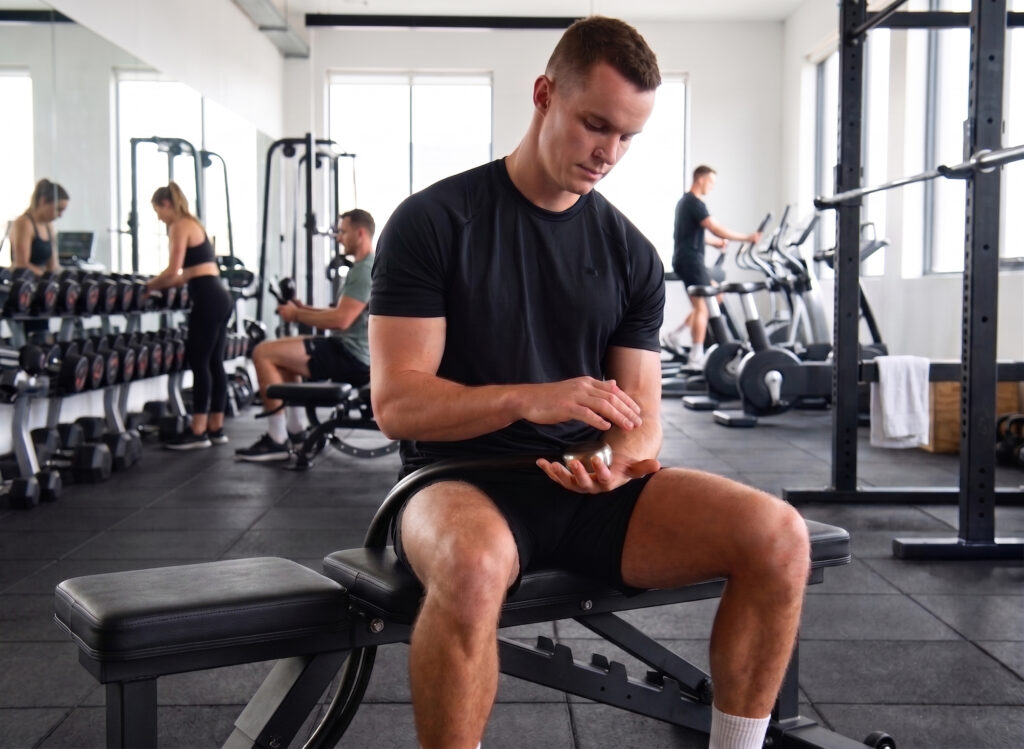
A recent study by researchers at Ulster University has explored the usability and potential benefits of CET’s palm cooling device for reducing fatigue in clinical populations.
The study produced promising early findings while also highlighting opportunities for further research. Researchers presented their findings at the CASES Conference before publishing the study in the Journal of Sports Sciences.
Palm cooling has previously attracted interest within elite sport. Research suggests that it may help delay fatigue and improve work capacity.
However, researchers have paid less attention to its potential role in clinical rehabilitation. Therefore, this exploratory study examined the acceptability and usability of a palm cooling device from both patients and healthcare professionals.
Exploring Palm Cooling in Clinical Populations
The research involved 15 patients with a range of neurological conditions, including brain injury and stroke. Five experienced physiotherapists also took part in the study.
Patients completed repeated 30-second Sit-to-Stand (STS) tests and fatigue assessments. They completed these tests both with and without the palm cooling device.
In addition, patients and clinicians completed the System Usability Scale (SUS) questionnaire. This allowed researchers to assess the device’s usability and the overall user experience.
Although the study did not identify a statistically significant reduction in fatigue, the results provided some encouraging observations.
Participants reported a slight reduction in perceived fatigue while completing progressively more exercise with the palm cooling device. Consequently, researchers highlighted the need for larger studies to investigate its potential clinical benefits further.
Positive Feedback on Usability
One of the study’s strongest findings involved the device’s usability. Patients gave the device an average System Usability Scale score of 86.66 out of 100.
This score indicates excellent usability. Furthermore, participants described the device as easy to use and reported that it created a calming and relaxing experience.
The feedback also highlighted opportunities for future design improvements. In addition, participants emphasised the importance of providing more information about the evidence behind palm cooling.
Healthcare Professionals Recognise Potential
Healthcare professionals also responded positively to the device. Clinicians gave it an average usability score of 79 out of 100, which falls within the good usability category.
However, clinicians also identified important considerations for future adoption. In particular, they highlighted the need for further evidence demonstrating clinical effectiveness.
Clear treatment protocols would also help healthcare professionals understand how to incorporate palm cooling into rehabilitation programmes.
Promising Findings for Future Research
Overall, the study found that the CoreTx GO device demonstrated high usability and strong user acceptability among both patients and healthcare professionals.
The findings also suggest that palm cooling could help moderate subjective fatigue in clinical populations. However, researchers noted that further studies must establish whether the technology can produce measurable improvements in functional performance.
Nevertheless, the research provides a useful foundation for future investigation. As interest in palm cooling continues to grow, further research could help establish its potential role within rehabilitation and clinical care.
For CET, the findings also demonstrate the potential for its palm cooling technology to extend beyond elite sport. By continuing to support research and innovation, CET aims to explore new applications for cold-therapy technology across healthcare, rehabilitation, sport, and performance.