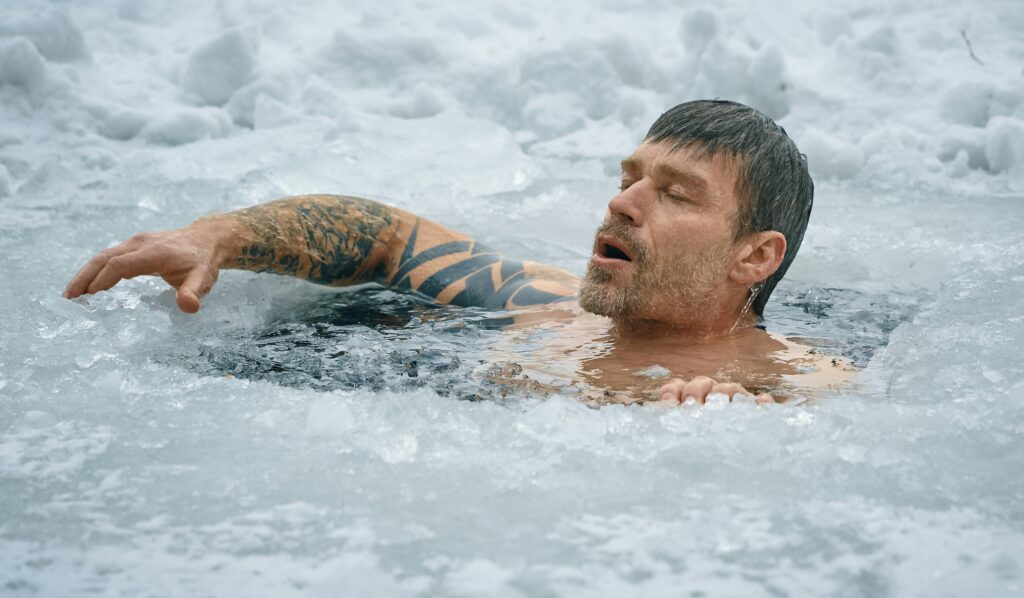
If you’ve ever dipped a toe into an ice bath and immediately recoiled, you’re not alone. Cold tolerance varies significantly from person to person, and there are well-established physiological reasons why some individuals embrace cold water immersion while others find it intensely uncomfortable.
One of the primary factors is body composition. Individuals with higher levels of body fat tend to tolerate cold better because fat acts as an insulator, slowing heat loss. In contrast, leaner individuals, such as many endurance athletes, often feel the cold more acutely due to faster heat transfer away from the body.
Circulation and vascular response also play a key role. When exposed to cold, blood vessels constrict to preserve core temperature, but the strength and speed of this response varies between individuals. Some people experience a more aggressive constriction, particularly in the hands and feet, which can make cold water immersion feel much more intense.
There is also some evidence that cold tolerance can vary slightly between ethnic groups, largely due to ancestral climate adaptation. Research has shown that populations whose ancestors lived in colder climates for many generations often demonstrate better peripheral circulation and metabolic heat production during cold exposure, while those from historically warmer climates may experience stronger vasoconstriction in the extremities, making cold feel more uncomfortable. However, repeated exposure and acclimatisation are still major factors, meaning regular ice bath users typically improve their tolerance significantly over time regardless of background.
The good news is that cold tolerance can be improved
Interestingly, adaptation over time is one of the biggest factors in cold tolerance. Regular cold water immersion can reduce the initial shock response, improve circulation efficiency and change how the body perceives cold stress. This is why ice baths often become more manageable after repeated use.
In high-performance environments, the type of cold exposure also matters. Systems that circulate water enhance cooling through convection rather than simple still-water cooling. In advanced ice bath systems such as the CryoSpa Pro, jets continuously move cold water across the body, preventing a warmer boundary layer forming around the skin. This creates a more penetrating and consistent cooling effect, meaning that water at 8°C can feel closer to 3°C in terms of perceived intensity.
Ultimately, cold tolerance isn’t about toughness — it’s about physiology, experience and adaptation. Understanding these differences helps athletes and practitioners use ice baths more effectively and safely, ensuring recovery strategies are tailored to the individual rather than a one-temperature-fits-all approach.